
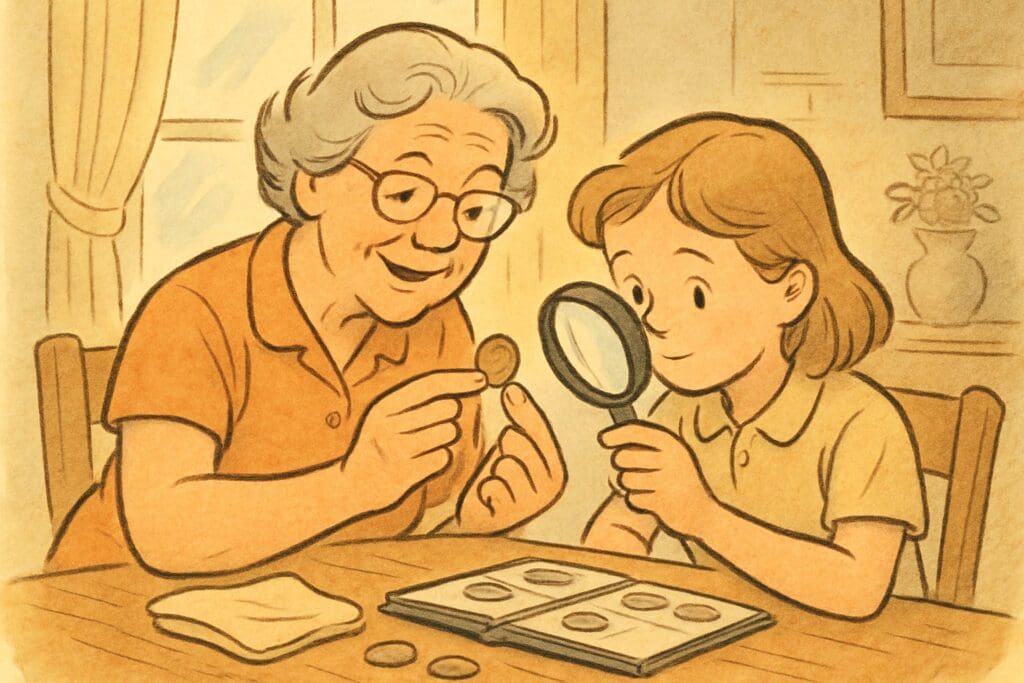
It’s one of the most common instincts in this hobby, and also one of the easiest ways to hurt a coin without meaning to. You pull an old coin out of a drawer, it looks dull or spotted, and the obvious move seems to be giving it a good scrub. Don’t.
Cleaning strips away a coin’s original surface. Even a soft cloth or a mild dip removes microscopic metal and leaves telltale hairline scratches under magnification. Collectors and grading services can spot a cleaned coin immediately, and it can cut a coin’s value substantially, sometimes by more than half, because what’s actually valuable is the coin’s original, undisturbed surface, not how shiny it looks in your hand.
What we tell people instead: handle coins by the edges, store them in proper holders instead of loose in a jar or pocket, and leave toning and patina alone. That dull, aged look isn’t dirt, on most coins it’s the metal’s natural, protective surface, and it’s part of what makes an old coin look genuinely old. You’ll notice we don’t stock coin-cleaning chemicals here. That’s not an oversight.
If a coin genuinely has caked-on dirt, that’s a job for a professional conservator, not a kitchen sink.