
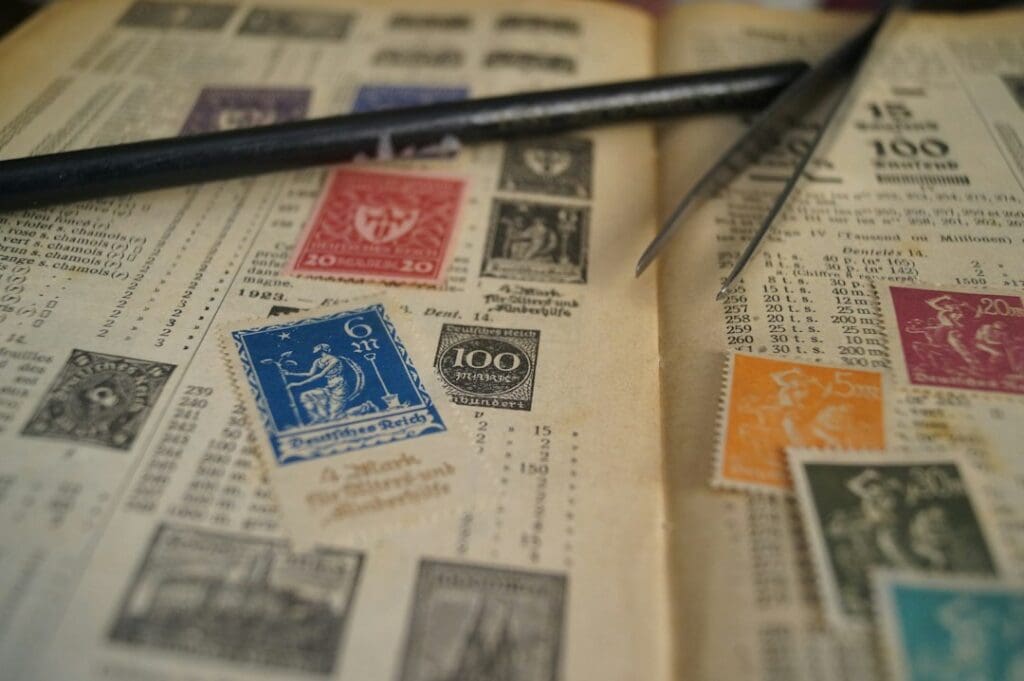
Most collectors can tell you roughly how many stamps they own, but very few can tell you exactly. That is perfectly normal while a collection is small. As it grows, though, a simple record of what you have starts to pay off in surprising ways. It helps you avoid buying duplicates, makes your want list easier to build, and gives you a clear picture of your collection if you ever need to share it with family.
The good news is that an inventory does not need to be fancy. A notebook or a basic spreadsheet is plenty. The key is to start small and keep going.
Why Bother With an Inventory?
There are a few practical reasons to keep one. First, you will stop buying the same stamp twice. Second, a record of what you own makes it much easier to see what is missing, which feeds directly into a want list. Third, if your collection is ever passed on to someone else, a written record helps them understand what they have and what matters to you.
There is also a quieter benefit. Writing down what you own makes you look at each item again, and that often leads to noticing details you had missed.
Decide What to Record
You do not need every possible detail. For most collectors, a handful of columns is enough:
- The country and the year of issue.
- A short description or catalog number, if you use one.
- The condition, such as mint or used, in your own words.
- Where it is stored, such as the album and page number or the stock book and page.
- What you paid and when you bought it, if you want to track that.
If you use a catalog number, be consistent about which catalog you follow. Mixing systems makes the record harder to search later.
Start With One Album or One Stock Book
Trying to catalog an entire collection in one weekend is a good way to burn out. Instead, pick one album or one stock book and work through it. When it is finished, move on to the next. Even a half-finished inventory is more useful than none at all, so there is no need to wait for a perfect system.
If you keep your stamps in stock pages or mounts, the page numbers give you a ready-made location system. Writing the location in your record means you can find any stamp in a few seconds.
Take a Few Photos
Photographs make a record much more useful. You do not need studio lighting. A phone camera, good daylight, and a clean background are enough for a clear shot of each page. Take one photo per album page, and name the files so they match your notes, such as the album name and page number.
Store the photos in more than one place. A copy on your computer and a copy in a cloud folder or on a drive kept elsewhere protects you if something happens to one of them.
Keep It Current
The easiest time to update an inventory is right when something new arrives. Make it part of your mounting routine: when you place a new stamp in its mount and into the album, add a line to your record before you put the supplies away. It takes less than a minute, and it keeps you from building a backlog.
Once or twice a year, set aside a short session to review the whole record. Fix any mistakes, fill in missing locations, and update your photos.
Protect the Collection Itself
A record is only half of the story. The collection itself still needs good storage, with stamps in mounts or glassine envelopes, albums kept away from sunlight and moisture, and careful handling with tongs. Your inventory tells you what you have, and good materials make sure it is still in good shape years from now.
If you are just getting started, begin with the next ten stamps you add. Write them down, note where they live, and take a photo of the page. Ten entries today become a useful record before you know it.