
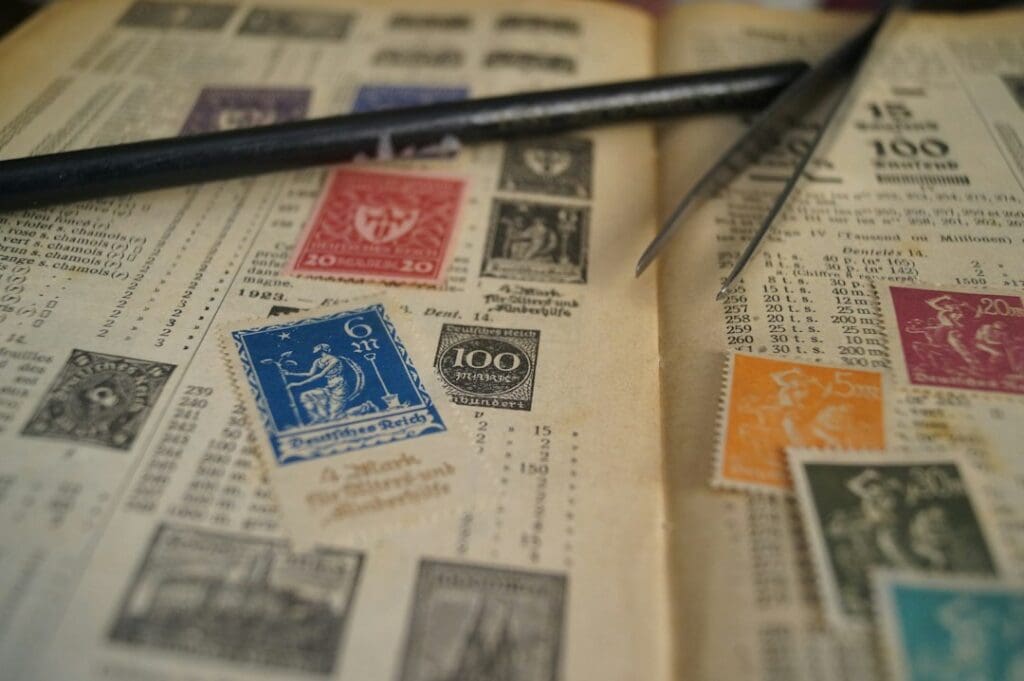
Choosing a stamp mount should not feel like guesswork. The right size protects your stamp, keeps it looking tidy on the page, and saves you from wasting mounts on trial and error. The good news is that measuring a stamp takes only a minute once you know what to look for.
Why Size Matters
A mount is a clear pocket that holds a stamp without touching its face or gum. If the pocket is too tight, it can press on the edges or perforations. If it is too loose, the stamp can shift around, especially when you turn album pages. A snug but comfortable fit is the goal.
What You Need
You do not need fancy equipment. A clear ruler with millimeter markings, a pair of stamp tongs, and a clean, well-lit surface are plenty. Many collectors also use a plastic gauge made for stamps, which has marked outlines you can lay over the stamp. Always handle the stamp with tongs rather than your fingers, since oils and moisture from skin can leave marks.
Step by Step: Taking the Measurement
Lay the stamp face up on a flat surface. Measure the height first, from the outer tips of the perforations at the top to the outer tips at the bottom. Then measure the width the same way, from one side edge to the other. Always measure the full stamp, perforations included, because the mount needs to hold the whole piece.
Write the numbers down as height by width. Mount sizes are usually listed in that order, with the height first, so keeping the same habit avoids mix-ups. If you are working with a sheet of stamps, a block, or a stamp with an attached tab, measure the whole piece as one unit.
Choosing the Mount
Once you have your numbers, look for a mount that is just a little larger than the stamp in both directions. A small amount of extra room lets the stamp slide in without catching, while still keeping it from moving around. If your measurement falls between two sizes, choose the slightly larger one rather than forcing the stamp into a tight pocket.
If your collection includes many different stamp sizes, it helps to keep a small note of the sizes you use most. Commemoratives, definitives, and souvenir sheets often come in different shapes, so a handful of common mount sizes will cover most of what you own.
Common Mistakes to Avoid
- Measuring only the printed design and leaving out the perforations.
- Mixing up height and width when ordering.
- Handling the stamp with bare fingers while measuring.
- Forcing a stamp into a mount that is clearly too small.
A Quick Tip for Odd Shapes
Not every stamp is a neat rectangle. Triangles, diamonds, and other unusual shapes should be measured at their widest and tallest points. A mount that fits those two measurements will hold the stamp safely, even if there is some extra space in the corners. When in doubt, slide the stamp in gently with tongs and check that it sits flat with a little breathing room.
Measure Once, Mount Well
A careful measurement is one of the simplest ways to protect your collection. Take a minute to size each stamp, choose a mount with a little room to spare, and your pages will look neat and your stamps will stay safe for years.
Find the right stamp mounts for your collection at iStampMounts